Skip the Anthems: Why Rock's Biggest Names Are Betting on the Unexpected at Festivals

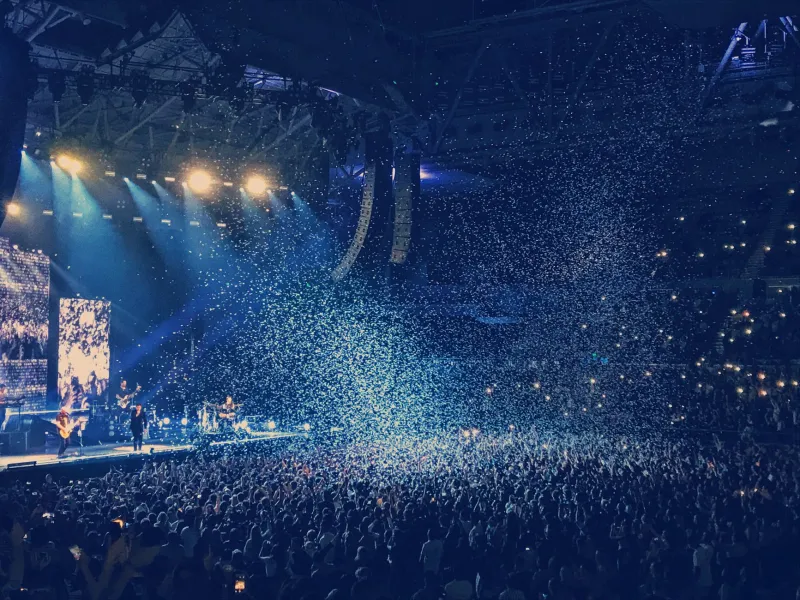
Photo by Photo by Uwe Conrad on Unsplash on Unsplash
There's a certain unspoken contract that used to exist between a festival headliner and the crowd standing in front of them. You play the hits. We sing every word. Everyone goes home happy. Simple.
But lately? That contract is getting renegotiated — and not everyone agreed to the new terms.
Across the festival circuit over the past few seasons, major rock acts have been doing something that's equal parts bold and polarizing: swapping out the stadium anthems for deeper album cuts, surprise premieres of unreleased material, and setlists that look like they were designed for the diehards in the front row rather than the casual fan who just wandered over from the food trucks. It's a gamble. And the results have been messy, fascinating, and honestly kind of exciting.
The Old Formula Isn't Dead — It's Just Getting Challenged
Let's be clear about one thing: plenty of headliners still lean hard into the crowd-pleasers, and there's nothing wrong with that. When 80,000 people collectively lose their minds during a song they've known for twenty years, that's not a failure of creativity — that's a festival doing exactly what it's supposed to do.
But there's a growing faction of artists who are pushing back against the idea that a festival slot has to be a glorified greatest-hits package. Festival promoters have started noticing the shift, and opinions are split.
"We've had headliners come in with setlists that made our programming team genuinely nervous," said one promoter who works with several major Southwest rock festivals. "You're thinking about the casual attendee, the person who bought a three-day pass mostly for the experience. If an artist goes out there and plays nine tracks from a record that came out in 2009 and two new songs nobody's heard, you're taking a real risk with the room."
But that same promoter acknowledged the upside: "When it works, it really works. People talk about it for years."
Why Artists Are Making the Switch
So what's actually driving this? A few things, depending on who you ask.
For some acts, it's about legacy management. After decades of playing the same ten songs, there's a real creative restlessness that sets in. Festival appearances — especially at events that draw a more engaged, music-forward crowd — feel like a rare opportunity to reintroduce catalog material that got overshadowed when it first came out.
For others, it's strategic. With streaming data giving artists unprecedented insight into what their most dedicated listeners are actually playing on repeat, there's more confidence now in betting on a deeper cut that has a passionate cult following rather than a surface-level hit that everyone kind of knows but nobody truly loves.
And then there's the social media angle, which has completely changed the calculus.
"A surprise premiere at a festival is a moment," explained a music industry analyst who tracks live event trends across the US. "If you play your biggest hit, people film it, sure. But if you play something nobody expected — or drop a song that isn't even out yet — that footage spreads differently. The conversation is different. You're not just another band playing their catalog. You're an event."
The Sound Engineer's Perspective
Here's something that doesn't come up enough in these conversations: the people behind the board.
Sound engineers who work major festival stages have a front-row seat to how these setlist decisions play out in real time, and their take is more nuanced than you might expect.
"Deep cuts are actually often more interesting to mix," said one veteran engineer who has worked festivals from California to the Carolinas. "The hits have been performed so many times that everything is dialed in to a near-clinical level. A deeper track, especially something the band hasn't played live much, has more energy to it. There's a looseness. The band is more present."
That looseness, he noted, can translate directly to the audience — even if they don't consciously recognize it. "People feel when a band is genuinely invested in what they're playing. You can't fake that."
The flip side, he admitted, is that unfamiliar material is harder for a crowd to latch onto in a festival environment. "You're competing with wind, with people talking, with the sheer scale of the space. A song people know gives them something to hold onto. A song they don't know requires more from them."
When It Backfires — And When It Doesn't
The honest truth is that this strategy doesn't always land. There have been notable festival sets in recent years where headliners went deep into the catalog and visibly lost sections of the crowd — not through any failure of performance, but simply because the emotional connection wasn't there for a significant chunk of the audience.
Festival culture in the US is broad. On any given night at a major rock fest, you've got the obsessive fan who can recite B-sides in chronological order standing twenty feet from someone who knows the band from one song on a movie soundtrack. Designing a setlist that serves both of those people is genuinely hard.
But when artists get it right — when they sequence a set that gives the casual fan enough familiar ground while rewarding the devoted listeners with something unexpected — the results can be genuinely transcendent. There's a reason certain festival performances get talked about for years while others fade from memory within a week.
"The sets people remember aren't always the ones where every song got a huge reaction," the promoter noted. "Sometimes it's the one where the crowd got quiet in a way that felt intentional. Where something unexpected happened and the whole field just... paused."
What This Means for the Festival Experience Going Forward
For regular festival-goers, this trend has a practical implication worth thinking about: going in with flexible expectations is becoming more important than ever.
If you're heading to a festival specifically to hear a headliner run through their back catalog of classics, it's worth doing a little homework. Check recent setlists from their current tour leg. Follow the artist's social channels in the weeks leading up to the show. The days of being able to predict a headliner's set with near-total accuracy are fading.
And honestly? That might be a good thing.
There's an argument to be made that predictability is the enemy of a truly memorable live experience. Festivals exist in a specific space — they're not quite a traditional concert, not quite a music discovery platform, but something in between. The best headliners understand how to use that space, and increasingly, that means being willing to take the crowd somewhere unexpected.
The anthems aren't going anywhere. But the artists willing to bet on something deeper? They're the ones leaving the longest impressions.
And at the end of a long festival weekend, that's the kind of moment worth standing in the heat for.