Second Chances and Sold-Out Crowds: How Festivals Are Giving Canceled Tours a New Life
There's a particular kind of heartbreak that comes with a canceled tour announcement. You've got the tickets saved in your email, the hotel booked, the outfit picked out — and then the notification drops. "Due to unforeseen circumstances..." You know the rest. But something interesting has been happening across the American live music scene lately: festivals are swooping in and doing what tour buses couldn't.
Call it the ultimate second act. Artists who shelved entire touring cycles — some due to health issues, some because of the pandemic's long shadow, others for reasons they'd rather not discuss — are finding that a single festival slot can deliver everything a 30-date tour promised, and then some. The energy is different. The stakes feel higher. And for the fans who never got their night, it hits harder than any regular show ever could.
When the Tour Dies, the Festival Lives
Festival promoters have started paying close attention to the graveyard of canceled tours. "We look at it like scouting," says Marcus Delray, a regional booking coordinator who has worked with several mid-size Southwest festivals. "When a tour falls apart, there's this built-up demand that doesn't just disappear. Those fans are still out there, still hungry. We try to be the outlet for that."
It's a smart play, honestly. The promotional math works in everyone's favor. Artists come in with a pre-existing audience that's emotionally invested — sometimes more so because of the disappointment they weathered. Festivals get a headliner or a mid-bill act with a compelling narrative baked right in. And the fans? They finally get the moment they were cheated out of.
The phenomenon really accelerated post-2020, when the backlog of canceled tours reached staggering proportions. Some artists had fully rehearsed shows, merchandise already printed, and stage designs ready to deploy — all of it sitting in storage. Festivals became the pressure valve.
The Setlist That Never Was
One of the more fascinating wrinkles in this trend is what happens to the setlists themselves. When artists prepare for a major tour, they spend months — sometimes over a year — crafting the sequence of songs, the transitions, the storytelling arc of a night. When that tour evaporates, so does all that work.
But some artists are choosing to dust off those unreleased setlists and debut them at festivals. It creates something genuinely rare in live music: a performance that feels both spontaneous and deeply rehearsed. The crowd gets something that was never supposed to exist in this form.
"We had the whole show mapped out," one artist told us, speaking about a tour that fell apart before it ever launched. "The lighting cues, the intros, the banter between songs. We brought almost all of it to the festival set, compressed into 75 minutes. It felt like finally exhaling after holding your breath for two years."
For fans who follow setlists obsessively — and rock fans absolutely do — there's an added layer of intrigue when they recognize songs that were never performed on a canceled run. Social media lights up. The moment gets documented from a hundred different angles.
Promoters as Rescue Artists
The logistics of pulling this off aren't simple. Festival promoters describe a delicate negotiation process when approaching artists whose tours have collapsed. There's often grief involved on the artist's side, and sometimes embarrassment. Pitching a festival slot as a "consolation prize" would be exactly the wrong framing.
"You have to come at it from a place of genuine enthusiasm," says one festival organizer who asked to remain anonymous. "You're not offering them a lesser version of what they lost. You're offering them something different — a massive audience, a shared experience that a club show or even an arena can't replicate. Festivals have their own magic."
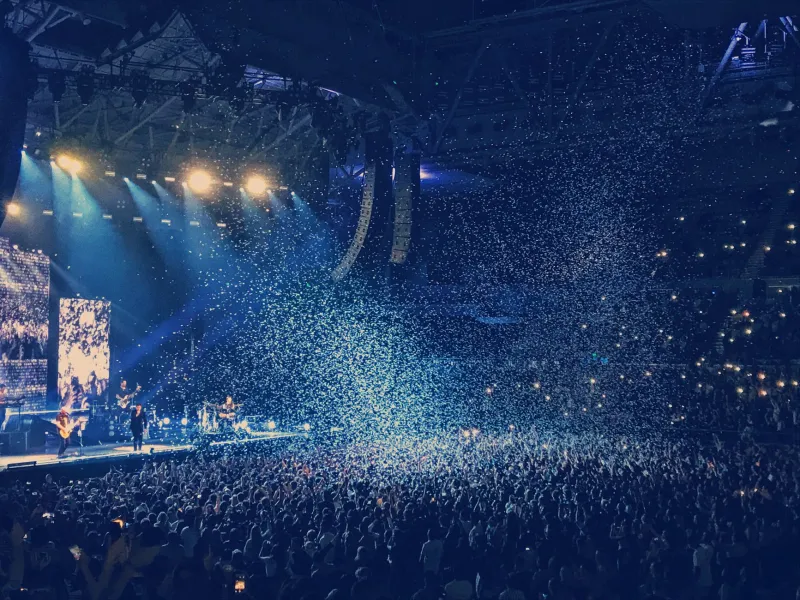
That magic is something artists increasingly seem to recognize. The communal atmosphere of a festival crowd — tens of thousands of people who've traveled, camped, and invested days of their lives into being there — creates a reception that's hard to match on a standard tour stop. When an artist walks out knowing half the crowd has been waiting years for this exact moment, the performance tends to reflect that.
Legacy Acts and the Festival Redemption Arc
It's not just newer artists taking advantage of this dynamic. Legacy rock acts have found festivals to be the perfect venue for revisiting eras they never properly celebrated live. A band that broke up before their biggest album got a full tour, or one that lost a key member before a reunion could happen, can use a festival stage to finally close that loop.
Festival audiences tend to skew multigenerational in ways that regular concert venues don't always achieve. A set that leans into nostalgia works precisely because there are fans of every age in the crowd — some who were there the first time around, some who discovered the music through their parents or through an algorithm. The festival format gives legacy acts permission to be exactly what they are without apology.
What This Means for the Future of Live Music
The broader implication here is that the line between touring and festival appearances is blurring in interesting ways. Artists are starting to think of a festival slot not as supplementary to a tour, but as a standalone event worthy of its own preparation and ambition.
For fans, that's genuinely good news. The era of the perfunctory festival set — 45 minutes of hits, minimal stage production, clearly just a pit stop between tour dates — may be giving way to something more intentional. When a festival performance becomes the performance, artists bring everything they have.
And when that performance is also the resurrection of something that was taken away? That's when the crowd roars loudest. That's when the phoenix actually rises.
Keep an eye on this space. The best festival moments of the next few years might just be the ones that almost never happened at all.