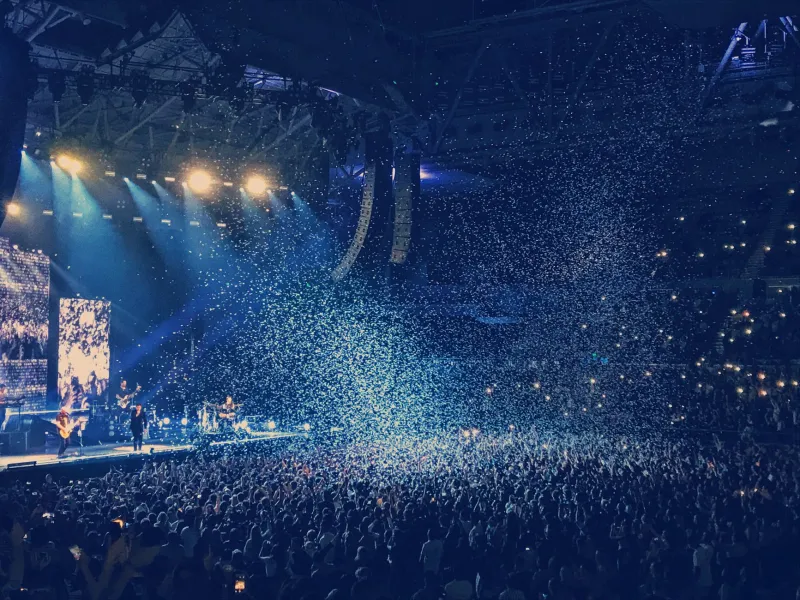
Ten Years, Ten Stages: The Rock Artists Who Climbed from Regional Showcases to Festival Headliners

Every band that headlines a major rock festival started somewhere smaller. That's not a platitude — it's a literal fact about how careers in live music are built. Before the massive stage rigs and the pyrotechnics and the crowd singing every word back at them, there were cramped festival side stages, broken monitors, and audiences of a few hundred people who may or may not have known the band's name before that afternoon.
The ten-year arc from regional festival act to legitimate headliner is one of the most compelling stories in rock music, and it's more common than you might think. What's less common — and far more interesting — is understanding why some artists make that climb while others stall, fade, or simply disappear. We looked at a handful of trajectories that tell that story in different ways.
The Regional Festival Circuit: More Important Than It Looks
It's easy to dismiss regional festivals as minor league stops on the way to something bigger. That's a mistake. For developing rock acts, regional festivals serve a function that no club show or streaming platform can replicate: they force you to perform for an audience that didn't specifically come to see you.
That distinction matters enormously. Playing your hometown bar to 200 loyal fans is valuable, but it tells you almost nothing about your ability to win over a stranger. A regional festival set — where you're on at 2pm on a Saturday and half the crowd is still finding their footing — is a genuine test. The artists who thrive in that environment tend to be the ones who eventually thrive everywhere.
"You learn to read a crowd fast," says one artist who played the Southwest festival circuit extensively before breaking through nationally. "When nobody in front of you knows your songs, you have maybe 90 seconds to make them care. That's a skill you can only develop by doing it over and over."
The Bands That Did It Right
The pattern among artists who successfully made the regional-to-national leap shares some consistent elements, even when the specific paths look very different.
First, there's the matter of live show investment. The acts that broke through didn't wait until they had a budget to develop a compelling stage presence — they built it with whatever they had. Interesting lighting rigs cobbled together from hardware store parts. Choreographed moments between band members that made a three-piece feel like a spectacle. A frontperson who treated a 300-person festival crowd with the same intensity they'd bring to a stadium.
That last point comes up repeatedly when you talk to booking agents and festival programmers who've watched careers develop over the years. "I've seen bands with incredible records who are forgettable live, and I've seen bands with decent records who make you feel like something important is happening every single time," one veteran booker told us. "The ones who move up are almost always in the second category."
Second, there's the question of catalog depth. One strong single might get you a regional festival slot. It won't get you a headlining set. The artists who made the decade-long climb consistently released music at a pace that gave them enough material to build a real set — and enough variety to keep returning fans engaged across multiple years and multiple festival appearances.
The Ones Who Stalled — And Why
For every artist who rode the regional circuit to national prominence, there are several who didn't. Understanding why is at least as instructive as celebrating the success stories.
The most common trap is what industry insiders sometimes call "the regional ceiling" — a comfortable level of local notoriety that feels like success but actually functions as a plateau. A band that headlines every festival in a three-state radius and sells out 1,500-capacity venues in their home city has achieved something real. But if they're not pushing beyond that zone — touring in markets where they're unknown, submitting for festivals outside their comfort region — that ceiling becomes permanent.
There's also the question of evolution. Rock music's history is littered with acts that found a sound that worked regionally and then made the fatal mistake of never developing beyond it. The artists who grew into national headliners almost universally show a discernible progression across their catalog — not abandoning what made them interesting, but deepening and expanding it. The ones who stalled often sound on their fifth album exactly like they did on their first.
"Audiences will tell you when you've stopped growing," one artist said. "They just stop showing up."
The Role of Early Festival Exposure in Shaping Sound
Here's something that doesn't get discussed enough: the regional festival circuit doesn't just build careers — it actively shapes the music itself. Artists who spend years performing at outdoor festivals in front of diverse crowds tend to develop songs that work in that specific context. Big choruses that land in open air. Dynamic shifts that translate to a crowd spread across a large field. An instinct for the kind of moment that makes strangers turn to each other.
This isn't a cynical observation about artists chasing a formula. It's about the natural feedback loop between performance and creation. When you see what works — what makes a crowd that didn't know your name an hour ago genuinely lose it — you bring that understanding back to the writing process. The artists who spent formative years on festival stages often write songs that feel built for exactly that environment, because in a very real sense, they were.
What the Decade Actually Looks Like
For the artists who made the full climb, ten years is both a long time and a remarkably compressed timeline for the kind of career development we're describing. Year one through three typically involves the regional hustle — building a local following, playing every festival that will have them, developing the live show through sheer repetition. Years four through six often bring a pivotal record or a viral moment that expands the audience beyond the home region. Years seven through ten are where the national festival slots start to appear, first in supporting roles, then moving up the bill.
The ones who make it to year ten as headliners almost never got there through a single breakthrough moment. They got there through an accumulation of smaller moments, each one building on the last. A regional festival set that impressed a booker. A tour support slot that introduced them to a new audience. A record that connected in a city they'd never played before.
The phoenix metaphor — something rising from the ashes of smaller, earlier versions of itself — is almost too on-the-nose here. But it's accurate. The bands standing in the largest font on today's festival posters are, in most cases, the direct result of years of grinding through the smaller stages. Those stages weren't a consolation prize. They were the foundation.
And somewhere right now, on a regional festival side stage on a hot Saturday afternoon, the next headliner is learning exactly that lesson.